HUNTSVILLE, Ala. — Modern threats are putting increasing pressure on the systems responsible for detecting, tracking and understanding what is happening in the battlespace.
A swarm of unmanned aircraft can introduce dozens of simultaneous targets with little warning. A sophisticated sensor can become a target itself. And when sensing and tracking systems operate independently, the loss or saturation of a single component can quickly degrade the operating picture available to the warfighter.
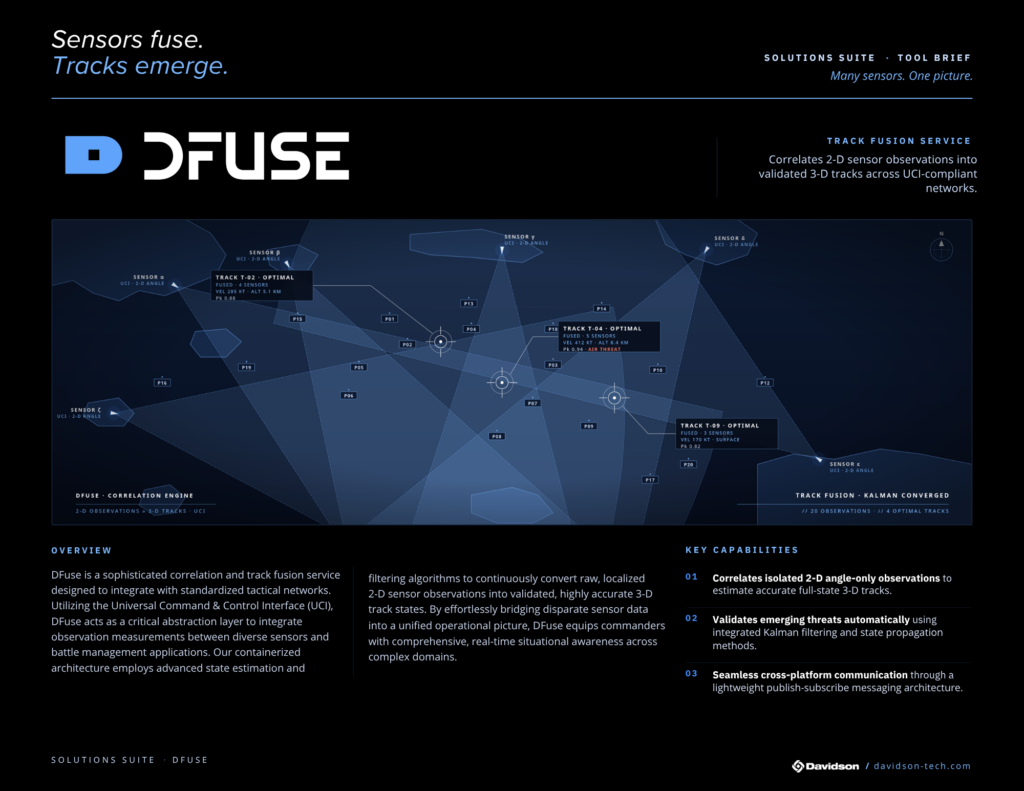
Davidson is developing DFuse, a real-time, multi-sensor tracking and fusion capability designed to approach that problem differently. It’s one of the 6 bespoke software tools in our solutions suite.
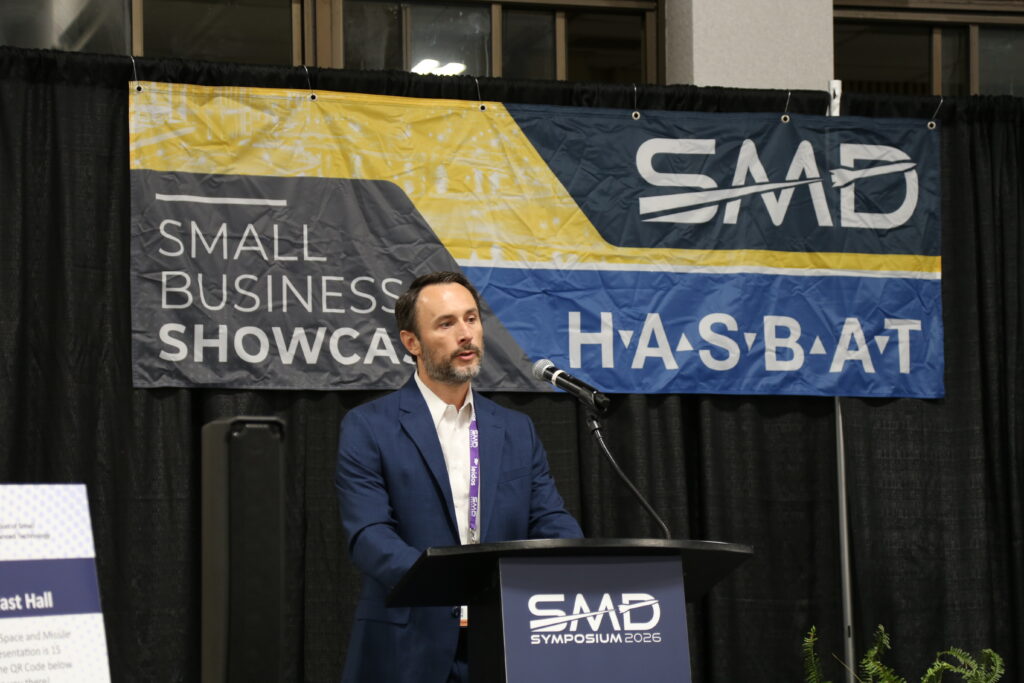
Jameson Venema, Chief Engineer for Algorithmic Warfare at Davidson, introduced DFuse this week during the Huntsville Association of Small Businesses in Advanced Technology (HASBAT) Small Business Showcase at the 29th Space and Missile Defense Symposium in Huntsville.

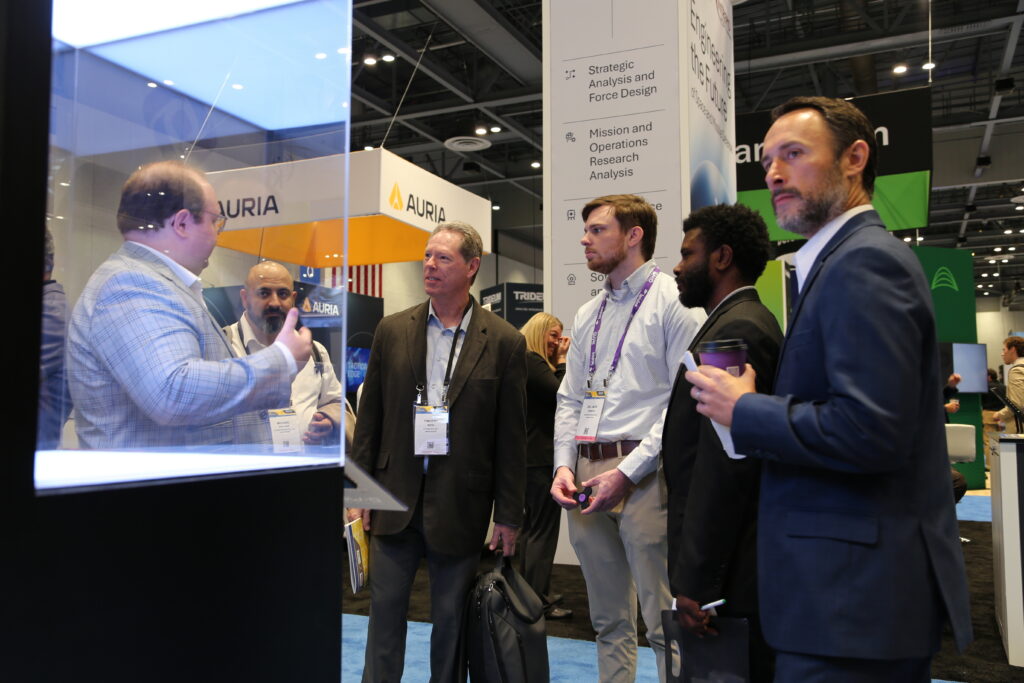
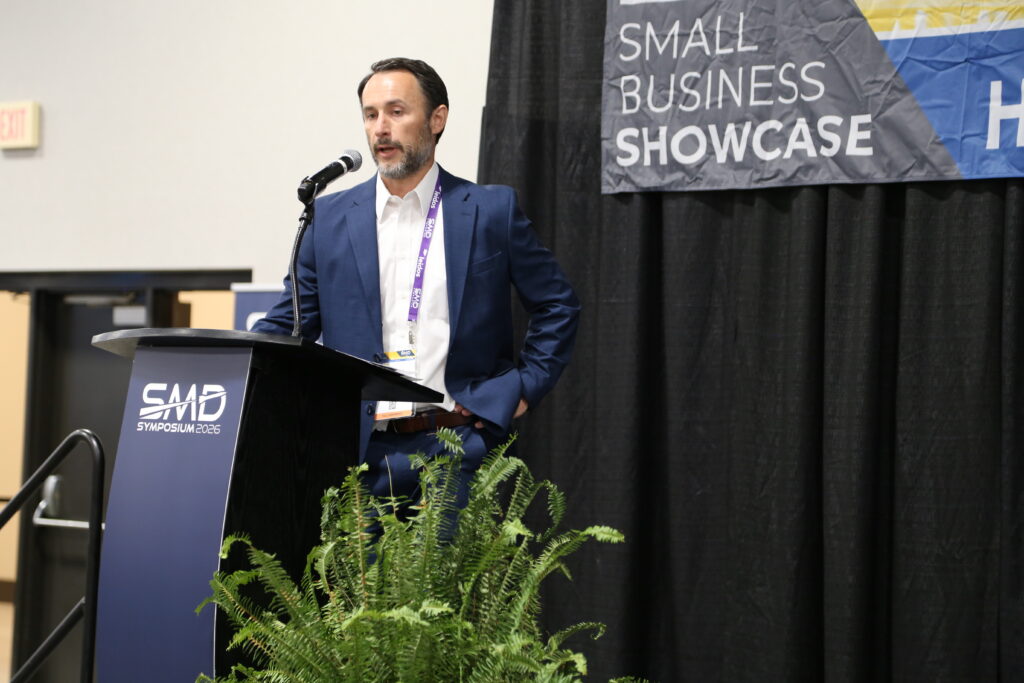
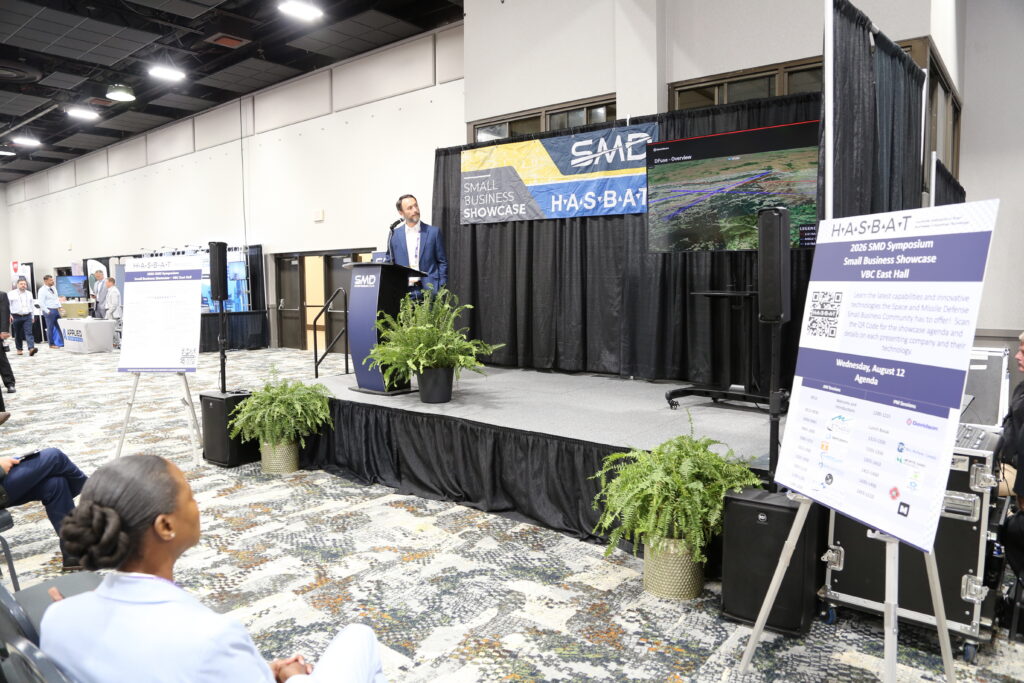
Developed through Davidson’s independent research and development efforts, DFuse is designed to combine information from geographically distributed, disparate sensors — including passive sensors, active sensors and existing track sources — to create a unified, actionable operating picture in real time.
Turning disparate sensor data into actionable tracks
The challenge is not simply collecting more sensor data. It is determining how separate observations relate to one another and using them to accurately estimate what an object is doing in three-dimensional space.
DFuse was built around the idea that a high-quality operating picture should not depend on a single exquisite sensor.
Instead, the architecture is designed to make use of distributed, non-exquisite sensing and combine those inputs at the network level. This approach can reduce reliance on individual sensing assets while creating additional pathways for maintaining track continuity when portions of the sensor network become unavailable, degraded or overwhelmed.
As additional sensors contribute measurements, DFuse continuously updates both the estimated track state and its associated uncertainty. Favorable sensor geometry can reduce that uncertainty; when contributing measurements disappear, the system reflects the resulting decrease in track confidence.
Built to scale with the threat
DFuse was developed from the outset with real-time performance and lightweight deployment in mind.
Written in high-performance C++, its containerized architecture allows processing to scale as additional computing resources become available. That combination is intended to support deployment closer to the tactical edge, where compute resources may be constrained but timely tracking information is critical.
Davidson has also incorporated Universal Command and Control Interface messaging to support the ingestion of observation and measurement reports and the transmission of fused track updates to other components across the network.
Testing against increasingly complex scenarios
DFuse is currently at Technology Readiness Level 5 and has been evaluated against simulated scenarios of varying complexity as well as a limited set of live experimentation data.
Testing has included dynamic airborne targets and more complex threat behavior, including ballistic missile trajectories. Across those scenarios, the Davidson team has evaluated not only positional accuracy but also track continuity, ambiguity and false-track behavior.
The team has also developed proprietary methods for reducing false and ambiguous tracks to maintain a cleaner operating picture.
Another challenge inherent to tracking software is parameterization. Tracking and fusion algorithms can contain numerous thresholds and parameters that must be tuned for specific sensor configurations, deployment geometries and expected threat environments.
To accelerate that process, Davidson developed an automated parameter optimization workflow that can evaluate candidate configurations through Monte Carlo analysis and tune DFuse for specific deployment and threat scenarios. Processes that could otherwise require extensive manual iteration can be performed largely overnight.

Moving from development to experimentation
The next step for DFuse is getting the capability into increasingly representative environments.
As Davidson advances the technology beyond TRL 5, the team is seeking opportunities to integrate DFuse into defense experimentation where its performance can be evaluated against additional sensors, architectures and operationally relevant threat scenarios.
Future development also includes support for additional data formats and communications protocols, enabling DFuse to integrate more rapidly into different experimentation architectures.
The goal is straightforward: provide a scalable, multi-modal tracking capability with compute requirements small enough to enable processing at the edge while producing the high-quality tracks needed to support downstream decision-making.
As the threat environment evolves toward greater numbers of faster, more distributed and increasingly complex targets, the ability to turn data from many different sensors into one trusted operating picture becomes increasingly important.
DFuse is Davidson’s approach to that challenge — and the team is ready to put it to the test.
Interested in integrating DFuse into an upcoming experiment or evaluation? Connect with Davidson to discuss sensor integration, experimentation and mission applications.