HUNTSVILLE, Ala. — For years, Huntsville and Colorado Springs, Colorado, faced off in one of the most closely watched basing decisions in the country: the location of U.S. Space Command’s headquarters.
In September of 2025, President Donald Trump announced the combatant command’s relocation from Colorado Springs to Huntsville, concluding a process that had become the subject of political and legal disputes. In April, Space Command leaders cut the ribbon on a new headquarters on Redstone Arsenal.
And on Monday, leaders from both communities came together at Davidson headquarters with a new message: The competition over U.S. Space Command may have been fierce, but the national security mission is bigger than either city.
“There is no reason to pretend Colorado Springs and Huntsville have not competed fiercely over the last several years. We have,” Colorado Springs Mayor Yemi Mobolade said. “We fought for our communities because we believe in them. But leadership is not only about how we compete. It is also about how we move forward when the competition is over.”
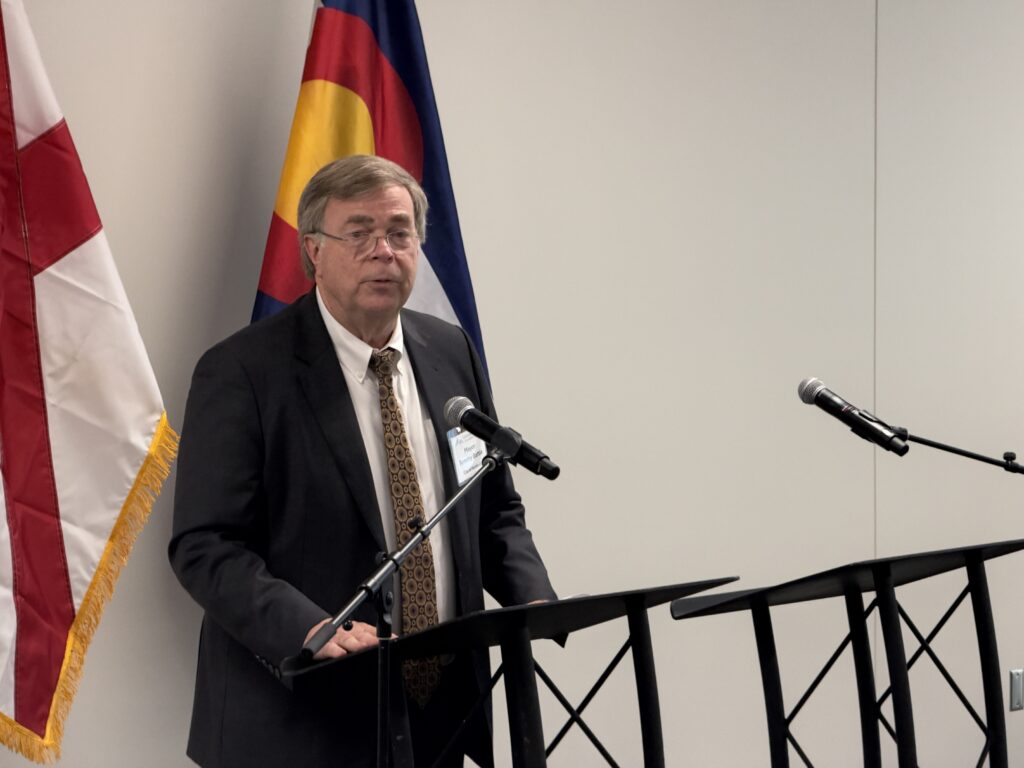
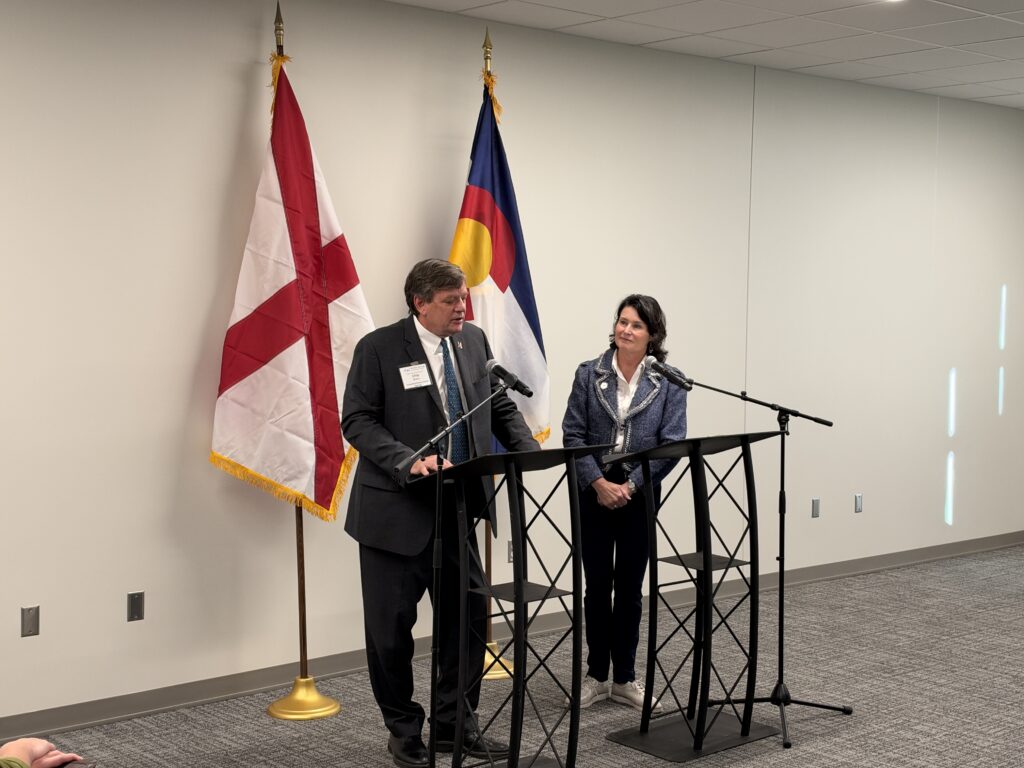
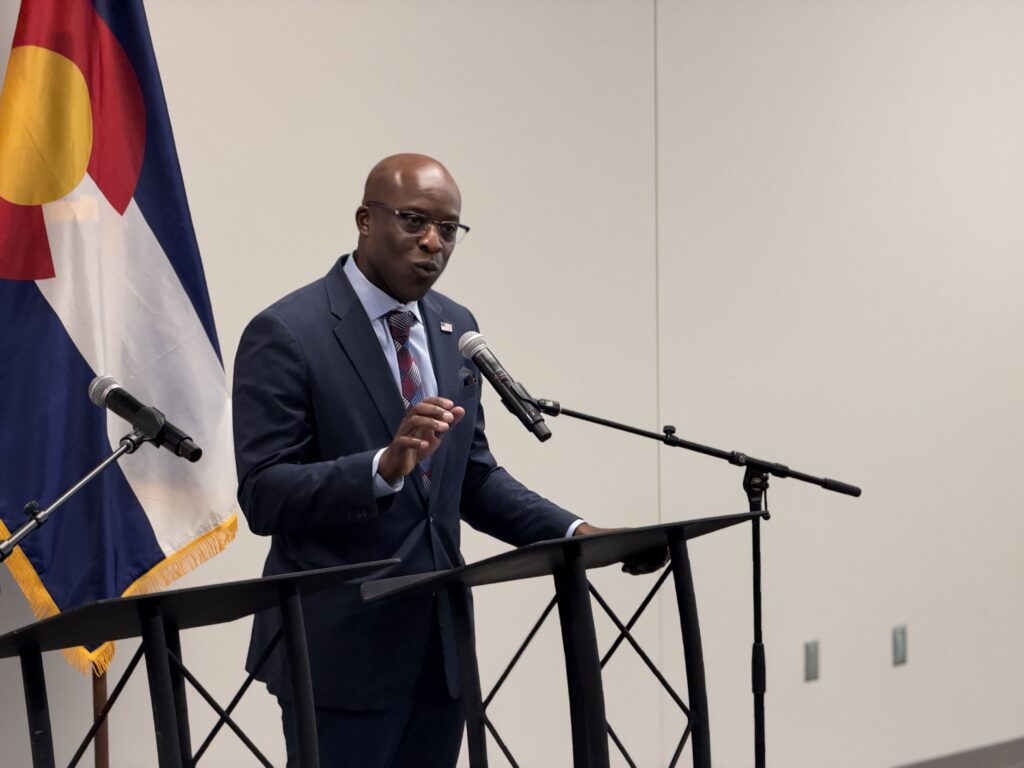
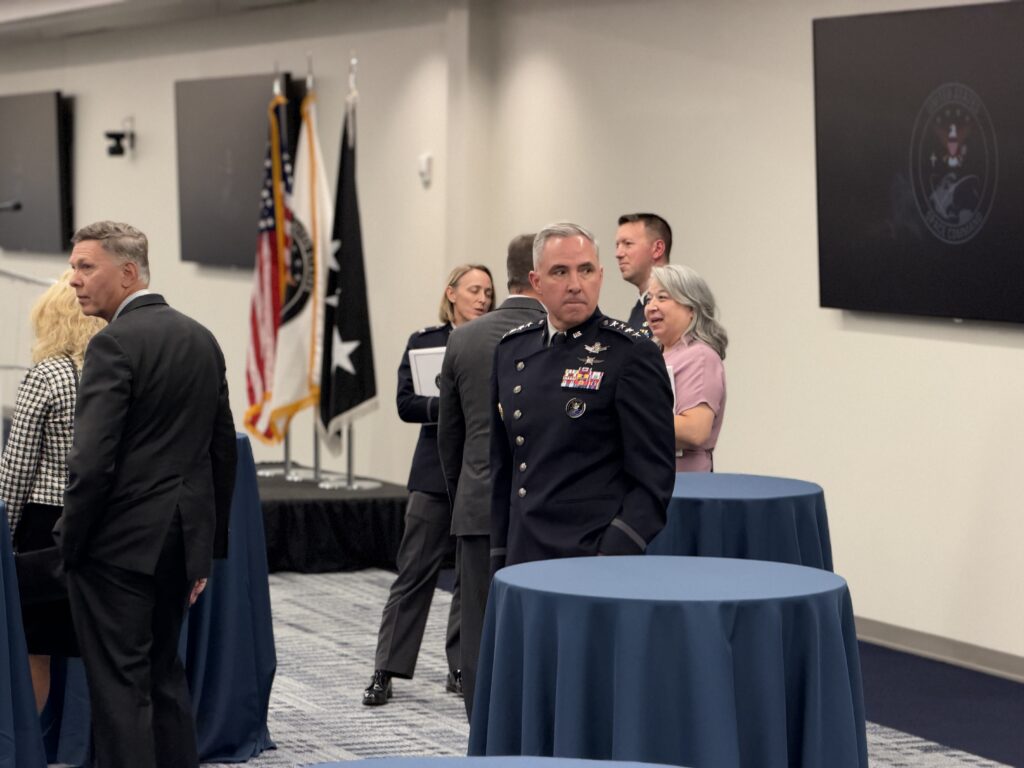
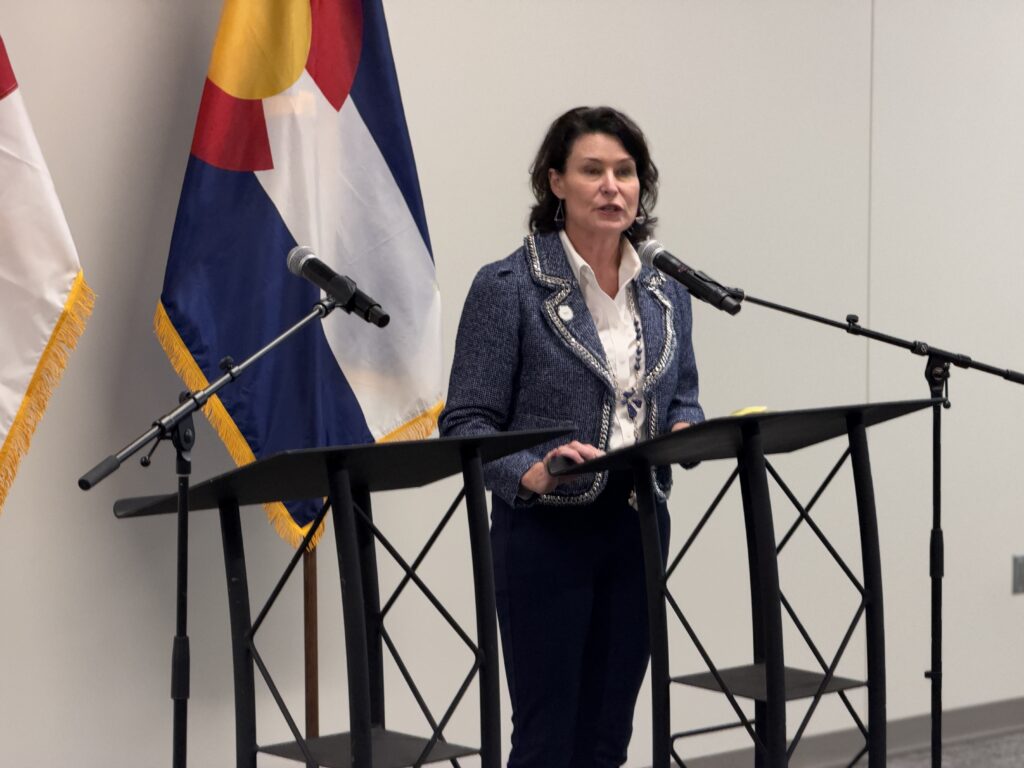
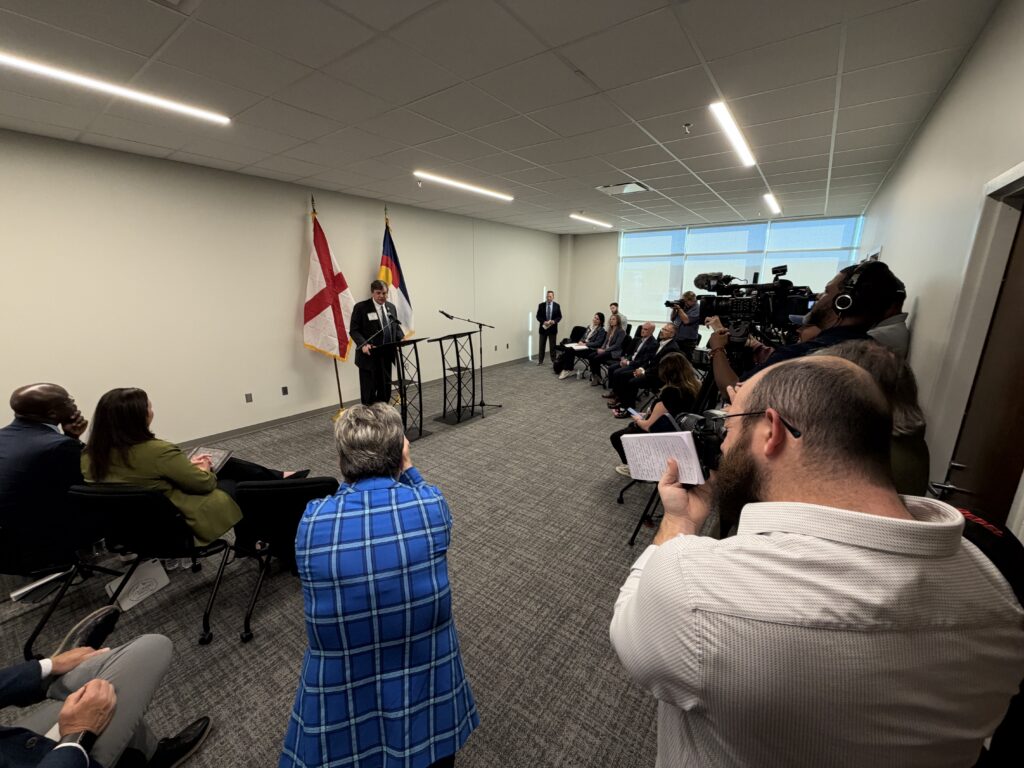
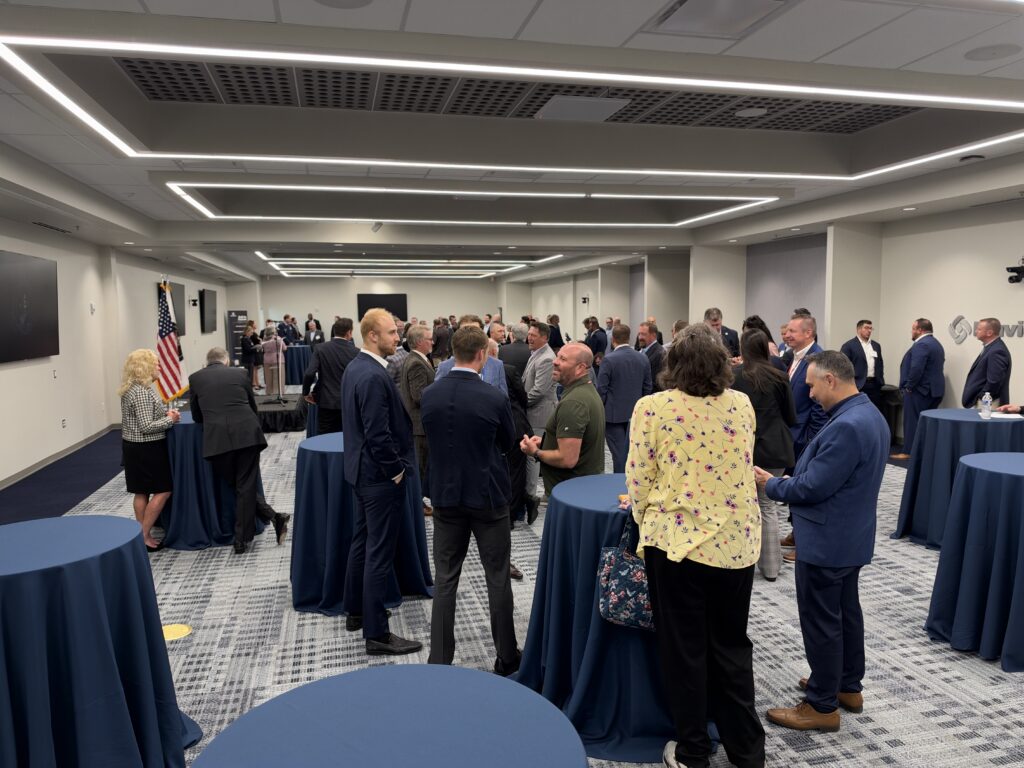
Davidson hosted the Oct. 5 joint press conference and reception as part of the Colorado Springs Chamber & EDC’s 2026 Huntsville Discovery Trip, a four-day visit bringing about 90 business leaders, elected officials and defense industry executives to North Alabama.
The delegation’s itinerary included stops at Redstone Arsenal, NASA’s Marshall Space Flight Center, the FBI’s Kinetic Cyber Range, and Cummings Research Park, along with briefings and discussions centered on defense, space, economic development, and the regional innovation ecosystem. Monday’s tour also included the new headquarters.
The visit comes as the Command prepares for its planned transition from Colorado Springs to Huntsville and as both regions position their extensive defense ecosystems to support the development of Golden Dome for America and other emerging national security priorities.
Mission First
Huntsville Mayor Tommy Battle opened Monday’s press conference by acknowledging the connections that already exist between the two communities — from businesses with operations in both regions to military families with ties to each place.
“We don’t see Colorado as a community that we’re competing with,” Battle said. “We see them as a partner.”
Rather than ignore the past contention, Mobolade addressed it directly, recalling an exchange with Battle earlier this year during Space Symposium in Colorado Springs. As the two mayors left a gathering hosted by U.S. Space Command commander Gen. Stephen N. Whiting, Battle approached Mobolade with a message concerning the service members, civilian employees and families who could ultimately make the move from Colorado to Alabama: Huntsville would take care of them.
That moment reframed the debate.
“Civility does not require us to abandon our convictions or stop competing for our communities,” Mobolade said. “It means we can compete without contempt, disagree without dishonoring, and when the moment calls for it, put something larger than ourselves first,” said Mobolade.
Complementary Defense Communities
Moving forward does not mean the two regions will stop vying for investment, companies, talent, or future missions. Instead, leaders emphasized the areas where their capabilities are complementary — particularly as the United States works to field increasingly integrated space and missile defense architectures.
Colorado Springs remains home to significant national security capabilities, including NORAD, U.S. Northern Command, U.S. Space Force Combat Forces Command and Peterson and Schriever Space Force Bases. Huntsville’s defense ecosystem includes Redstone Arsenal, the Missile Defense Agency, Army Materiel Command and other organizations central to missile defense, engineering and acquisition. U.S. Army Space and Missile Defense Command is headquartered in both locations.
“America needs both of us,” Mobolade said.
The connection is also reflected in industry. More than 70 aerospace and defense companies maintain operations in both regions, according to the Colorado Springs Chamber & EDC.
Chip Cherry, president and CEO of the Huntsville/Madison County Chamber, said Golden Dome’s success will ultimately be measured by the nation’s ability to collaboratively field new capabilities at speed and scale.
“With Huntsville’s and Colorado Springs’ central role in space and missile defense operations, our two regions are uniquely positioned to help support the next generation of homeland defense systems,” said Cherry.
Colorado Springs Chamber & EDC President and CEO Johnna Reeder Kleymeyer echoed that message, pointing to the scale and complexity of the emerging homeland defense mission.
“No single organization or community can deliver a program as complex as Golden Dome alone,” Kleymeyer said. “Colorado Springs and Huntsville each support critical elements of the nation’s space and missile defense architecture.”
Looking Forward
For El Paso County Board of County Commissioners Chair Carrie Geitner, Monday also offered an opportunity to formally recognize the outcome of the Space Command competition.
“We each competed for Space Command. We fought hard for our respective communities, but as we should at the end of any competition, today we shake hands and congratulate Huntsville,” Geitner said.
She added that El Paso County will continue supporting national defense missions from Colorado as U.S. Space Command establishes its permanent headquarters in Huntsville, while working with its counterparts in Alabama to exchange ideas and strengthen both regions.
The evening’s joint reception featured keynote remarks from Gen. Whiting. It brought together leaders from the two communities, along with companies whose operations span both markets. The gathering offered an opportunity to foster connections, exchange insights, and strengthen cross-market partnerships between two regions deeply embedded in America’s space and missile defense enterprise.
The significance was not that Huntsville and Colorado Springs suddenly stopped being competitors. They haven’t, and their leaders made clear that healthy competition for talent, investment and future missions will continue.
The significance was their recognition that competition and collaboration are not mutually exclusive.
“Today, you have a Republican mayor and an independent mayor standing together; not for politics, but for country,” Mobolade said. “Our cities have helped write important chapters in America’s story of space and national defense. Now we have an opportunity to write the next chapter together.”
His closing words distilled the message that brought the two communities together in Huntsville: “Mission first. Country always.”