
HUNTSVILLE, Ala. — Staying connected to the conversations shaping our region is an important part of Davidson’s engagement in the North Alabama community.
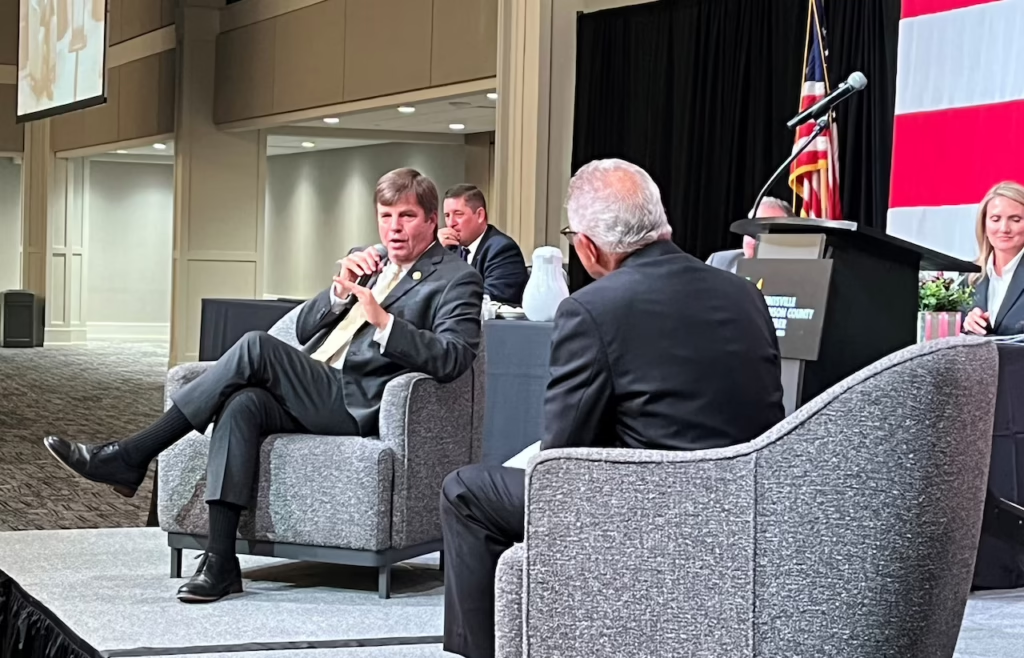
Members of the Davidson team attended Monday’s Washington Update in Huntsville, featuring U.S. Rep. Dale Strong. The Congressman for Alabama’s fifth district discussed federal issues and priorities affecting the area.
This year’s program shifted from a traditional address to a question-and-answer format, with retired WHNT News 19 anchor Steve Johnson facilitating a wide-ranging conversation about developments in Washington and what they could mean for North Alabama.
For Davidson, three moments stood out, thanks to their connection to the national security mission.
“Get ready, North Alabama.”
Strong’s clearest message for the defense community came during a conversation on Golden Dome and the continued growth of Redstone Arsenal.
Recounting a recent Oval Office meeting, Strong said President Donald Trump told him to “get ready and get focused on Golden Dome,” adding that North Alabama could have a larger role in the initiative than originally planned.
Strong followed with his own prediction: “Get ready, North Alabama. Golden Dome is on the horizon, and we’re going to play a huge part in it.”
For a region already deeply connected to the nation’s missile defense enterprise, the comments point toward the potential for additional Golden Dome activity to build on capabilities and expertise already concentrated at Redstone Arsenal and across the Huntsville defense community.
Capacity is becoming part of the mission
Asked about pressure on U.S. missile inventories following recent military operations, Strong pointed to increased manufacturing demands and efforts to expand production capacity.
“Our advanced manufacturing is being pushed at a level never pushed before,” Strong stated, referencing work underway in North Alabama to increase capacity for critical missile-defense components.
The discussion underscored a challenge extending beyond any individual weapon system: meeting emerging national security requirements will depend not only on developing advanced capabilities, but on industry’s ability to produce, integrate and field tools at the speed and scale the mission requires.
Preparing Redstone for what comes next
Strong also connected future mission growth with the infrastructure required to support it, citing U.S. Space Command’s transition to Redstone, Golden Dome, FBI growth, and other expanding federal missions.
Transportation, installation access, energy capacity, and workforce development all surfaced during the discussion as factors in sustaining that growth.
The message for North Alabama’s defense ecosystem was clear: new missions bring opportunity, but they also require the region and its industry partners to be prepared to support what comes next.
Team Davidson was a proud silver sponsor of the 2026 Washington Update.