By Davidson Technologies Human Resources
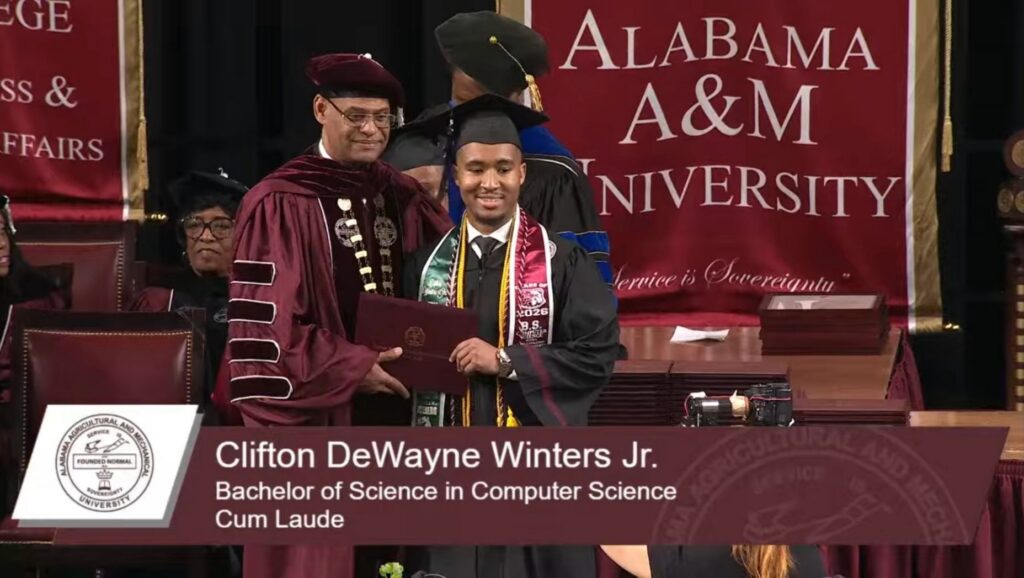
Clifton Winters Jr. experienced the most exciting weekend of his budding career earlier this month.
“First generation. That’s big news,” he said.
The Davidson Technologies automation engineer intern at the Advanced Research Center received his computer science diploma from Alabama A&M University, becoming the first college graduate in his family.
“Proud of myself that I persevered and maintained a good headspace throughout the four years,” he said.
A surprise guest appeared from Illinois, making Winters’ achievement feel even more special.
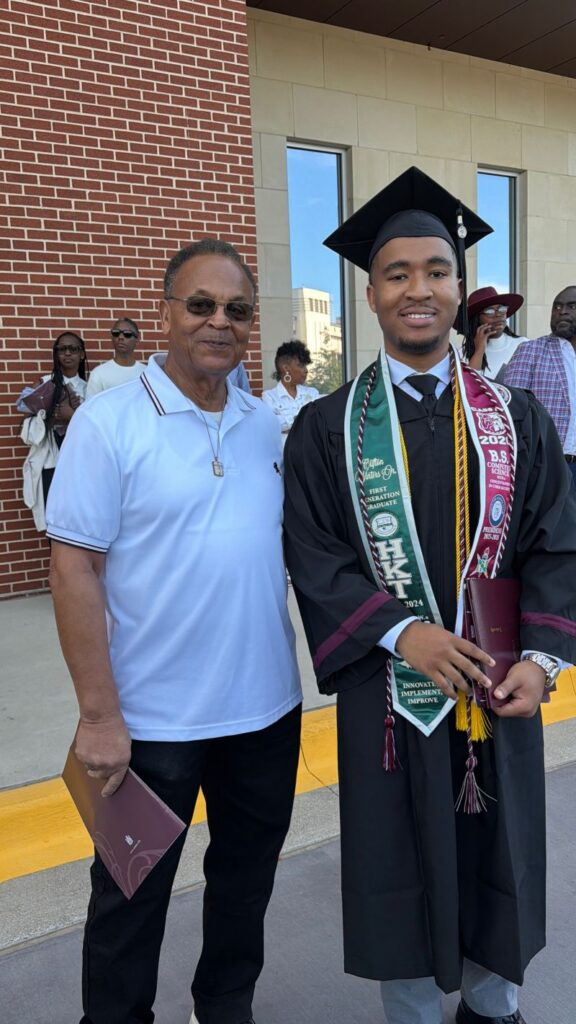
“My great grandfather, he went to the Army right out of high school. He never went to college,” said Winters. “So, when he came down here, he was like, ‘I’m glad you were able to do something that I never had the chance to do.’”
Winters finished Cum Laude, with a Department of Defense secret clearance and multiple internships under his belt.
He and Davidson’s cohort of new interns exemplify how the internship landscape has fundamentally changed, creating tremendous value for industry.
At Davidson, spring marks one of the busiest recruiting seasons, as we kick off internships in engineering, cybersecurity, accounting, and other critical disciplines.
“What continues to stand out year after year is how prepared today’s students are to contribute from day one,” said Leanne Tedesco, Davidson Talent Acquisition Lead.
A decade ago, companies primarily viewed internship programs as observational learning opportunities, measuring success by participation numbers and short-term staffing support. Interns frequently spent more time shadowing than directly contributing to mission-critical work.
Fast forward to 2026, and the metrics—and expectations—have shifted significantly. Programs are now measured by conversion rates, retention, certifications, project ownership, and long-term leadership potential.
“You’re contributing to the job itself, and you’re not just in the background,” said Winters. “The best way for interns to learn is for them to actually be involved.”
Last month, the National Association of Colleges and Employers released data showing the average intern-to-full-time-employee conversion rate for the 2024-25 academic year grew to 63%. NACE says that’s more than 10% higher than the previous year and the highest rate in five years.
The evolution reflects a broader shift in workforce strategy: internships are no longer supplemental programs; they are foundational investments in talent.
This generation of emerging professionals is proving the statistics true.
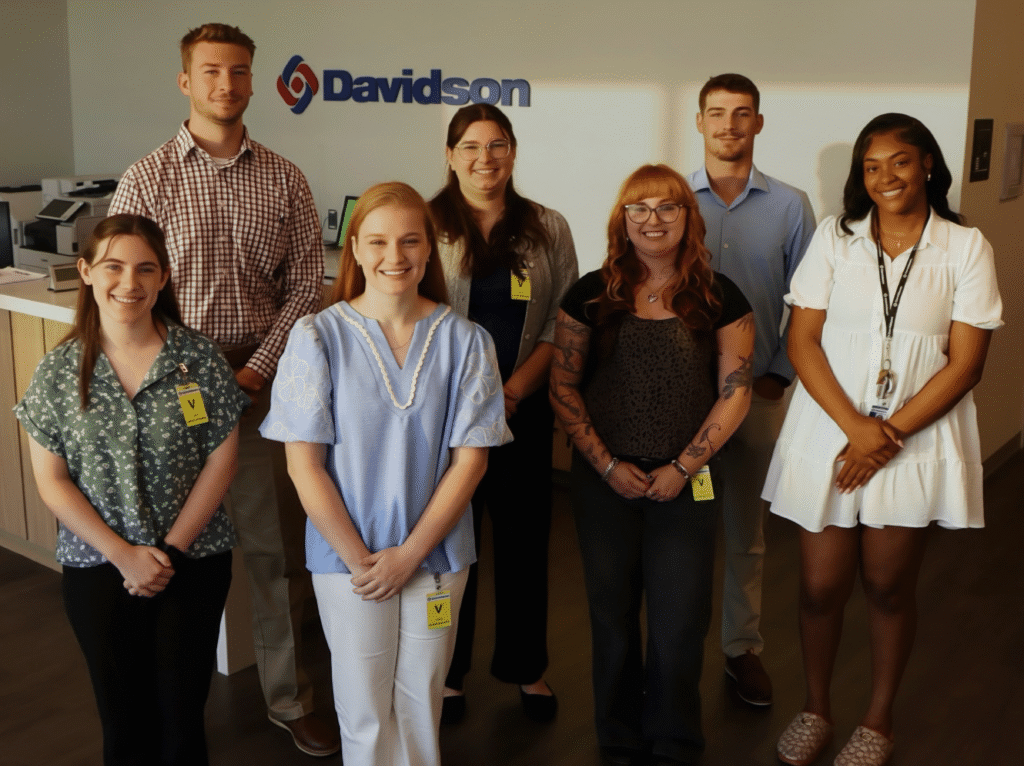
(Back row, L-R) Nicholas Linnean is studying engineering technology at the University of Alabama in Huntsville. Libby Garrett is working toward her Masters in Cybersecurity Management at UAH. Cole Lindeman, a collegiate golfer, is studying business management at Jacksonville State University. (Front, L-R) Abby Saalwaechter is getting a Master of Science degree in Cybersecurity at the University of Alabama at Birmingham. Jill Gillum is studying computer science at Mississippi State University. Dakota Strand graduated this month after earning a computer science degree from UAH. Amani Austin studied Criminal Justice at the University of Alabama.
Interns like Mississippi State University computer science student Jillian Gillum are arriving with certifications in hand, armed with technical proficiency developed through hands-on curriculum, and boasting a level of professionalism that reflects intentional preparation.
This week, Gillum kicked off her Linux system administrator internship at Davidson, just days after passing her Security+ exam.
“I’m really excited to get into some new things that I’ve never seen before, but also reinforce the skills I have,” she said.
“One of the most encouraging trends we’re seeing is the investment colleges and universities are making to prepare students for the workforce before they ever walk into the first interview,” said Alyssa Boggus, Davidson Senior HR Generalist.
From networking and elevator pitch development to mock interviews, professional etiquette training, hands-on technical labs, and career readiness programs, academic institutions are equipping students with both technical capability and professional confidence.
At Davidson, we have watched interns grow into full-time professionals and leaders. Their progression reinforces something we strongly believe: when organizations create meaningful opportunities for students to apply their skills in real-world environments, everyone benefits—the student, the company, and ultimately the mission we support.
We are excited to welcome our Summer 2026 intern class to Davidson. We look forward to investing in these talented students, learning from their perspectives, and providing opportunities for them to contribute meaningfully to the mission.
Winters’ great grandfather had something to say about that earlier this month. “When I got off the stage, we’re taking pictures,” Winters recounted. “He said, ‘Put your mind to it; you can do it.’”
Organizations investing early in emerging talent gain more than recruiting advantages. They gain fresh perspectives, accelerated onboarding, stronger cultural alignment and future leaders already connected to the mission.
The future workforce is not coming someday; it is here. The organizations that lean in now will be the ones best positioned to purposefully innovate.